Bayside Dewatering

Providing Melbourne’s Leading Dewatering Services

Image
Supplying services for Dewatering for basement car parks, swimming pools and to civil contractors to dewatering for sewer lines & tank installs
Dewatering Methods
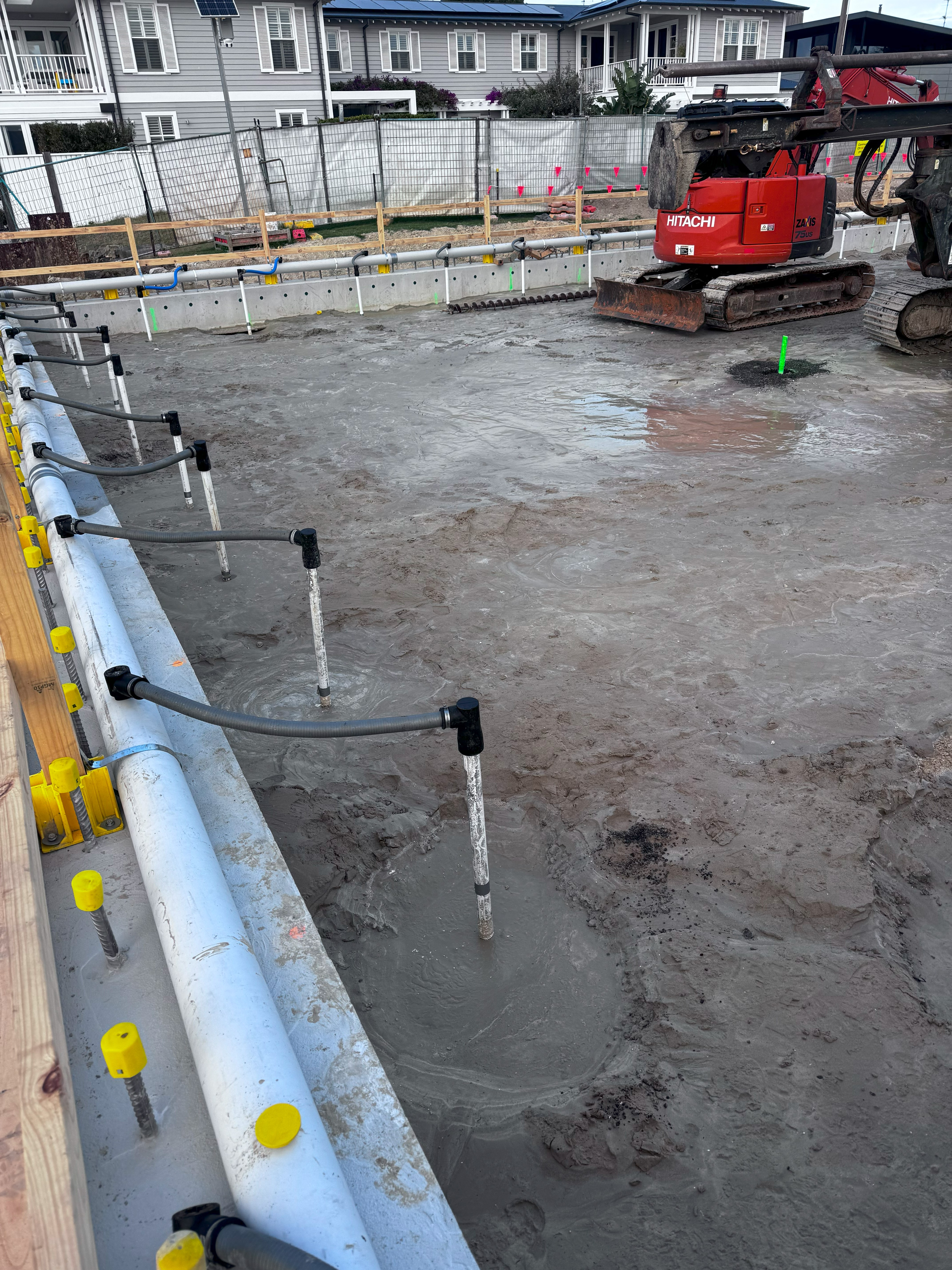
Spear Point Dewatering
The spear point dewatering process is a technique used to lower groundwater levels and control water seepage on construction sites, excavations, or other areas where
groundwater poses a challenge. It involves the installation of a series of spear points which act as temporary drainage system to remove water from the ground.
Once spear points are installed, they are connected to a header pipe usually situated at ground level. This header pipe collects the water and transports it to a dewatering vacuum pump. The pump creates a pressure differential that draws the groundwater into
the spear points and throughout the header pipe network. The extracted water is then discharged to a sediment tank and directed through a Magnetic flow meter and discharge to sewer point via trade waste agreement.
Drilled Well Sump Pumps
Sump pump dewatering is a commonly used method in construction to remove water from excavations, construction wells, orbasements. When working below the water table or in areas with high ground water levels, it becomes necessary to control and remove the water to create a safe and dryer working environment. This type of system is more commonly installed in clay formations with a high-water level Here’s how sump pump dewatering typically works construction wells:
A drilled hole and a slotted casing are installed below the excavated area. A sump pump is lowered into the excavated hole to the lowest point. The pump is connected via a discharge hose to a main discharge head pipe that takes the groundwater to sediment tank and magnetic flow meter and discharged to sewer point via trade waste agreement.
Trade Waste
Trade Waste
Trade waste management: Proper management of trade wastewater is crucial to protect the environment and comply with the local regulations. Businesses are typically required to have a Trade Waste Permit or a license that outlines the allowable discharge water limits and specific requirements for treating or pre-treating the groundwater before discharging to sewer.
Treatment and Pre-treatment: Treatment of trade wastewater before disposal may involve several processes, depending on the contaminates present in the water and the regulatory requirements.
Common treatment methods include physical processes (such as sedimentation, filtration, and screening) and chemical processes (such as disinfection) which are undertaken prior to discharging to sewer. The most common methods are via sediment tank or clarifier system. On the discharge side of the tank has a magnetic flow meter that calculates the volume of water to be discharged limits to sewer for the remainder
of the job

“Your Trusted Partner in Effective Water Control”

Unrivalled Dewatering Expertise

“UNLOCKING THE POWER OF WATER, OUR DEWATERING BUSINESS FLOWS WITH EXPERTISE, INNOVATION, AND RELIABILITY, ENSURING DRY FOUNDATIONS, EFFICIENT OPERATIONS, AND LIMITLESS POSSIBILITIES
The Equipment
The Equipment
We have the equipment and the expertise to help you get moving on any site you have water problems with.
The Expertise
The Expertise
In civil basement car parks, laying sewers, swimming pool dig outs and underground tanks that are installs below or on water table.